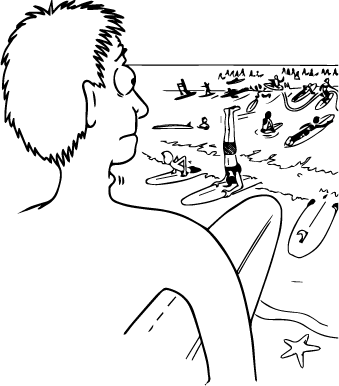
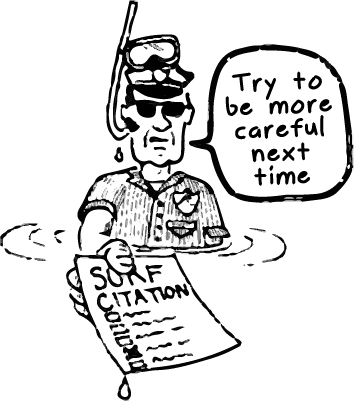
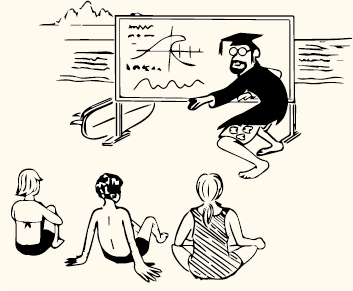
Surfers expect other surfers to know the rules. There are no traffic cops, referees or umpires to enforce them. Surfers tend to follow a live-and-let-live policy.
Select an appropriate surf spot.
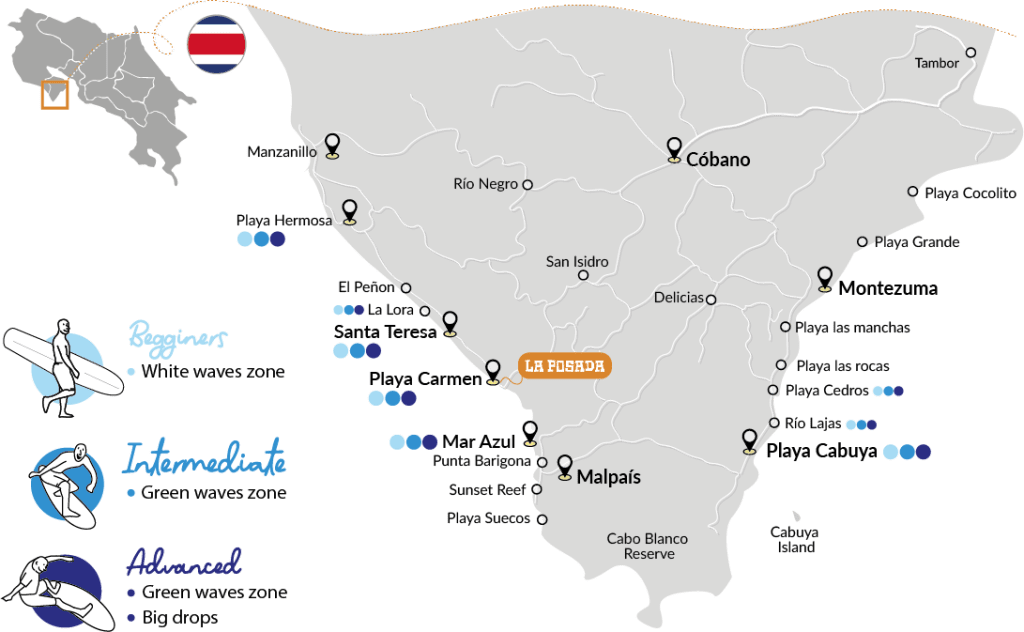
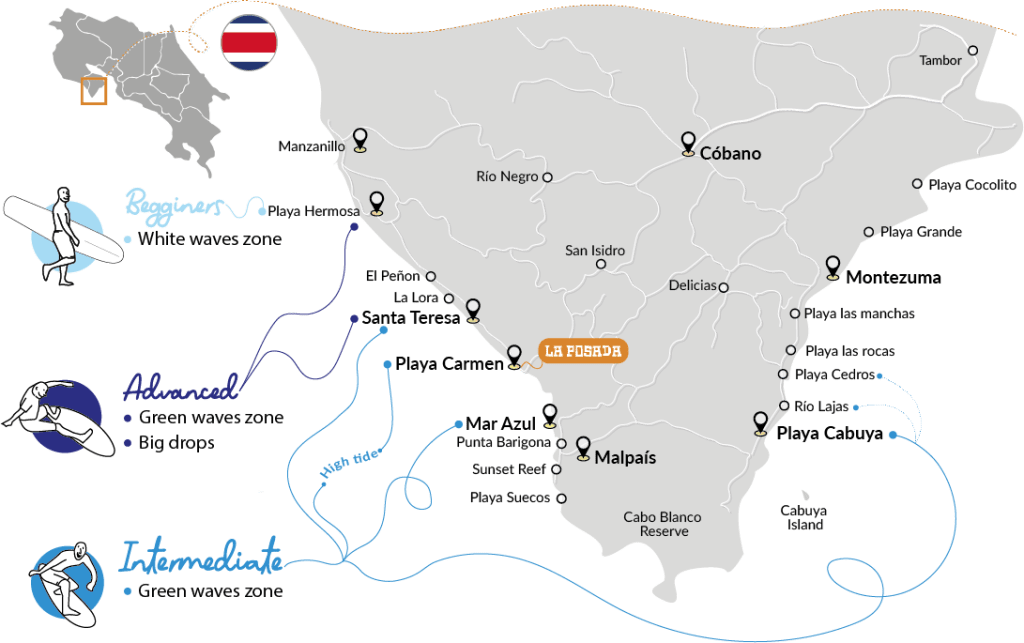
Locate a surf spot that is within your ability.
Respects the local.
The local surfer always has priority. It is part of the surf culture, to respect it.
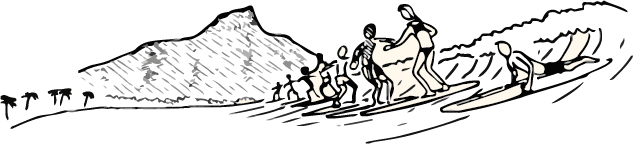
Don't Bring a Crowd.
Surfing in a large group can be a problem for you, and for those in the ocean.
Be aware of your surroundings.
Watching, listening and learning from what other surfers are doing. Learn to look left, right and in front before dropping in on a wave.
Stay out of the way of approaching.
If someone is about to run you over, the best thing you can do is turn into a turtle or swim to the bottom.
One person on one wave at a time.
Not only is it safer when there’s only one surfer on it, but it’s much more enjoyable that way. (Note: If a wave breaks in both directions, it is possible for two surfers to “split” the peak).
The first person has the right of way.
The first person to stop paddling and start gliding has the right of way.
If two people stand up at the same time?
The person closest to the curl, peak or breaking part of the wave has the right of way. If you are paddling out to catch a wave and you realize you are going to miss it, warn the other surfers who are lining up to catch it and encourage them to go for it./
Wait your turn.
If there are experienced surfers they will get the biggest and best waves. Look for the smaller waves or go to less competitive breaks where you can catch more waves.
What happens if you break a rule?
The most important thing is to apologize at the first opportunity. A simple apology shows that you are aware that you have made a mistake and that you will not do it again.
What if your board hits someone?
Check and make sure you, the other person and both boards are okay. Obviously, it helps if someone is hurt. If the board strike was your fault, offer to cover the cost of repairs.
ENFORCEMENT OF THE RULES
Surfers expect other surfers to know the rules. There are no traffic cops, referees or umpires to enforce them. Surfers tend to follow a live-and-let-live policy.
READING WAVES
Surfable waves depend entirely on winds and storms somewhere out at sea combined with favorable conditions offshore, all of which vary from place to place and time to time.
Waves absorb wind energy from large storms that span hundreds of miles, transmit the energy in the form of waves, and then release a concentrated version of the storm’s energy into the surf zone. The term seas refers to the general state of the ocean:
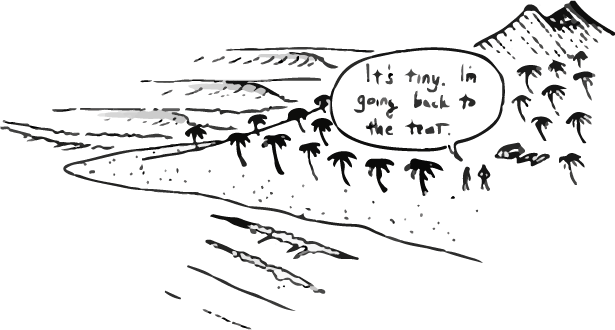
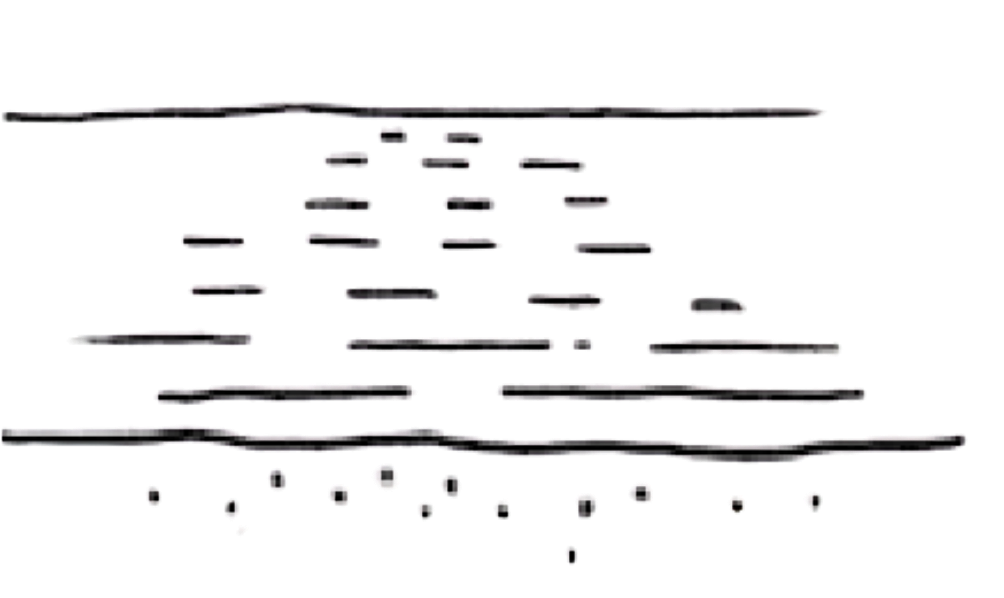
Too flat
(storm too far away)
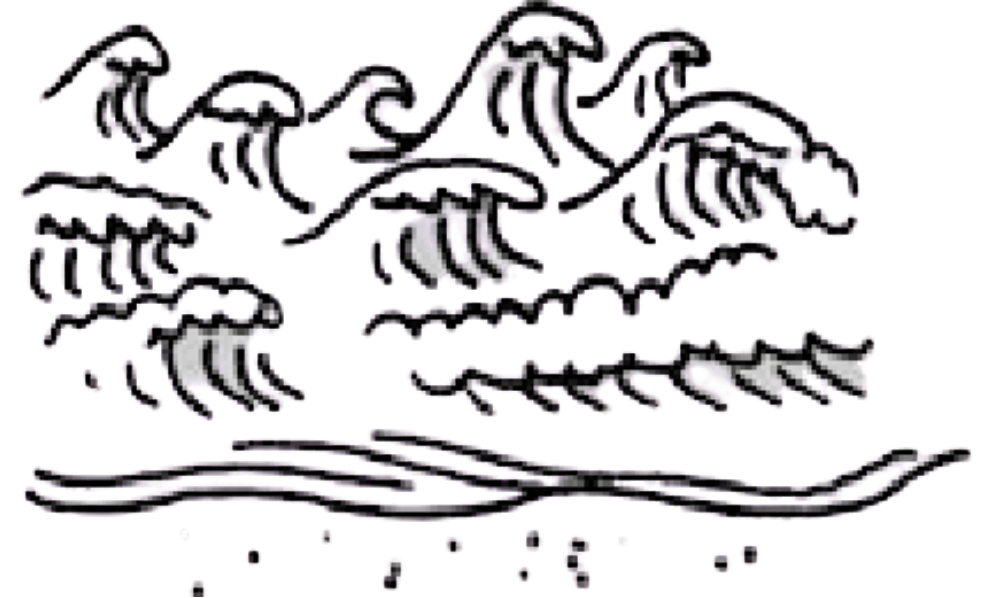
Too blown out or stormy
(storm too close)
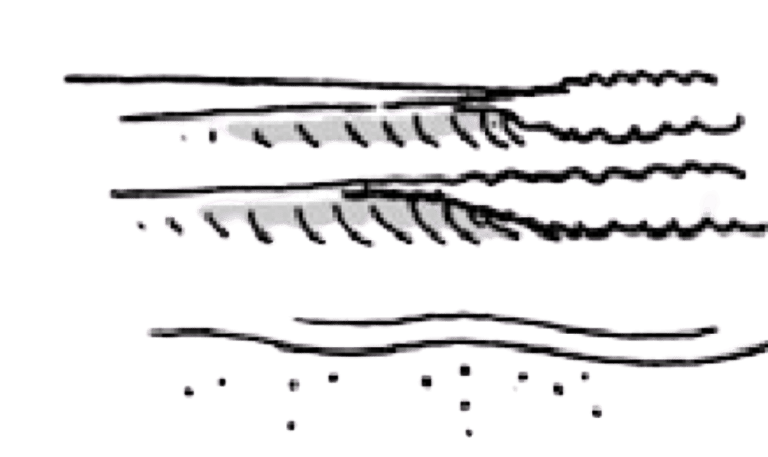
Just right!
CHECKLIST TO OBSERVE THE SEA
Wave Size
Wave Height: Ideal waves for beginners should be small, generally between 0.5 to 1 meter high. Larger waves can be dangerous and difficult to handle.
Wave Shape
Look for waves that break smoothly and predictably. Waves that close quickly or break on the shore can be dangerous.
Frequency
Time interval between waves: A longer interval between waves (8-10 seconds or more) provides more time to prepare and paddle without feeling pressure.
Win Direction
Offshore Wind: A light wind blowing from land to sea (offshore) is ideal, as it helps form cleaner, more manageable waves.
Avoid Onshore Wind: Wind blowing from the sea towards the land (onshore) can make waves messier and more difficult to surf.
Currents
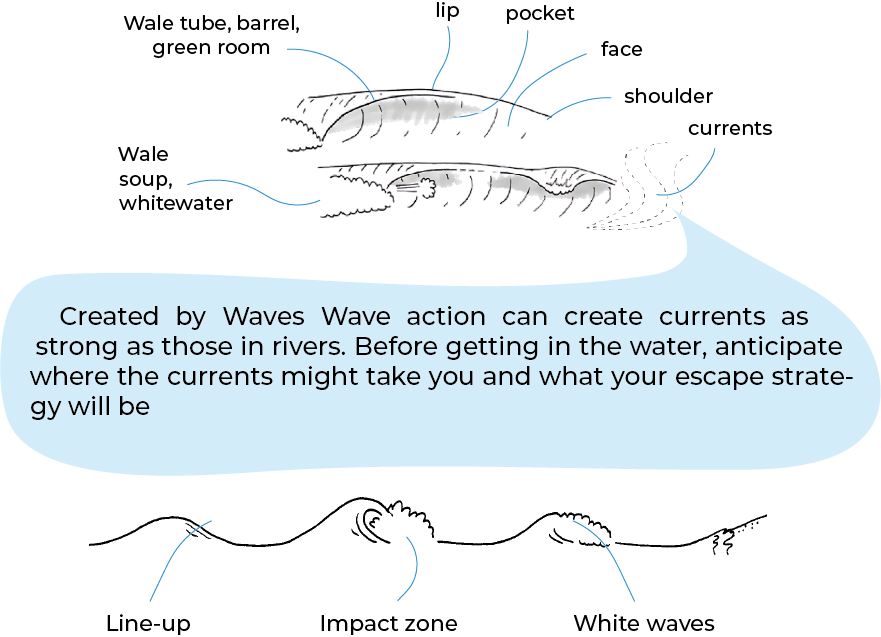
Avoid areas with strong currents or undertows. Currents can drag surfers away from their comfort zone. If you don’t know the ocean, ask someone.
Tide State
Medium to low tides are usually best for beginners.
Obstacles
Avoid Rocks and Reefs: Look for beaches with sandy bottoms and no dangerous obstacles such as rocks, reefs or man-made structures.
Presence of other Surfers
Watch the skill level of the surfers in the water. If there are a lot of advanced surfers, it may not be the best place for beginners.
Surfer Density
Look for less crowded areas to avoid collisions and have more room to practice.
TIDES
What are tides?
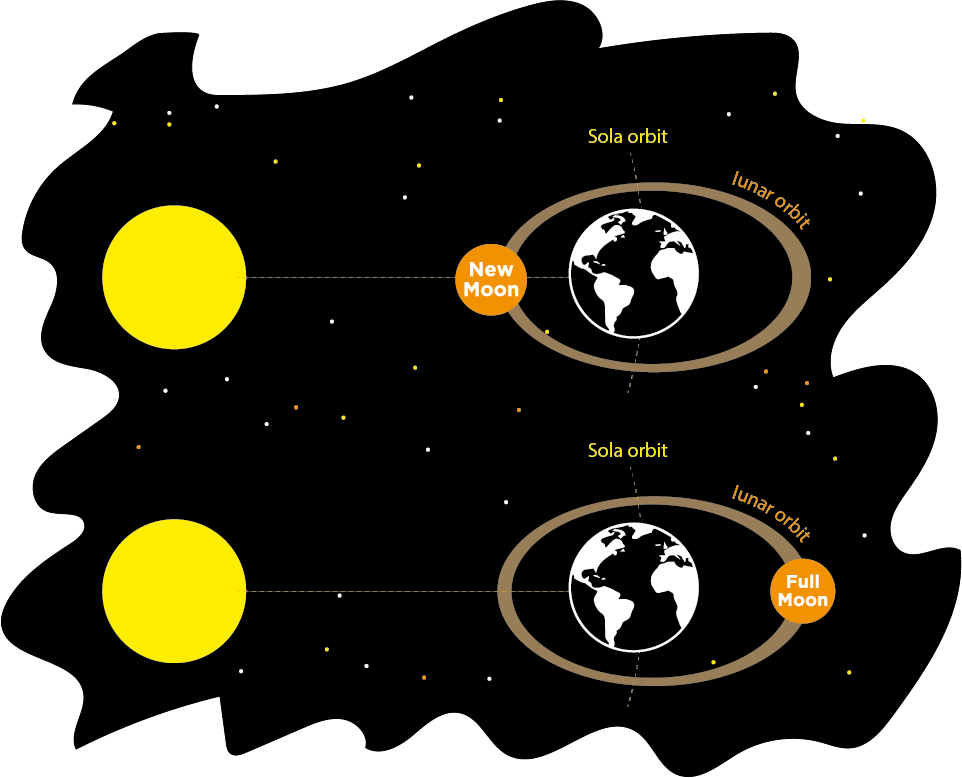
Tides are the periodic movement of the sea level, rising and falling throughout the day. This is due to the gravitational force exerted by the moon and the sun on the Earth.
How do the moon and the sun affect the tides?
Moon: The moon has a stronger effect than the sun on tides because it is closer to the Earth. The moon’s gravity pulls ocean water toward it, creating high tides on the side of the Earth closest to the moon and also on the opposite side.
Sun: Although the sun is much farther away, its gravity also influences tides. When the moon and sun align (during new and full moons), their combined forces cause higher tides, called neap tides. When they are at right angles (first and third quarter moons), we have lower tides, called neap tides.
LUNAR PHASES AND THEIR EFFECT ON THE TIDE
New Moon and Full Moon: During these phases, the sun, moon and Earth are aligned. This causes vivid tides, with higher high tides and lower low tides.
(December - May)
Santa Teresa
Weather and Conditions:
There is very little rain. The weather is drier and more pleasant.
Waves:
Consistent Waves: Waves are smaller and cleaner. Size: Waves are usually between 2 and 6 feet.
Wind:
Morning winds are generally calmer, which means cleaner and perfect surfing conditions.
Surfers:
Ideal for surfers of all levels, including beginners, due to more manageable waves and more stable conditions.
(May - Octover)
Santa Teresa
Weather and Conditions:
It rains more frequently. Weather is more humid and hot.
Waves:
Better Waves: Waves are generally larger and more consistent due to storms in the South Pacific. Size: Waves can vary from 3 to 10 feet or more.
Wind:
There is more wind in the afternoons, which can make waves a bit messy.
Surfers:
This is the preferred season for experienced surfers looking for more challenging waves.
INTRODUCTION
Surfing is more about feeling than thinking; everyone makes their own way in the sea.
Types of boards
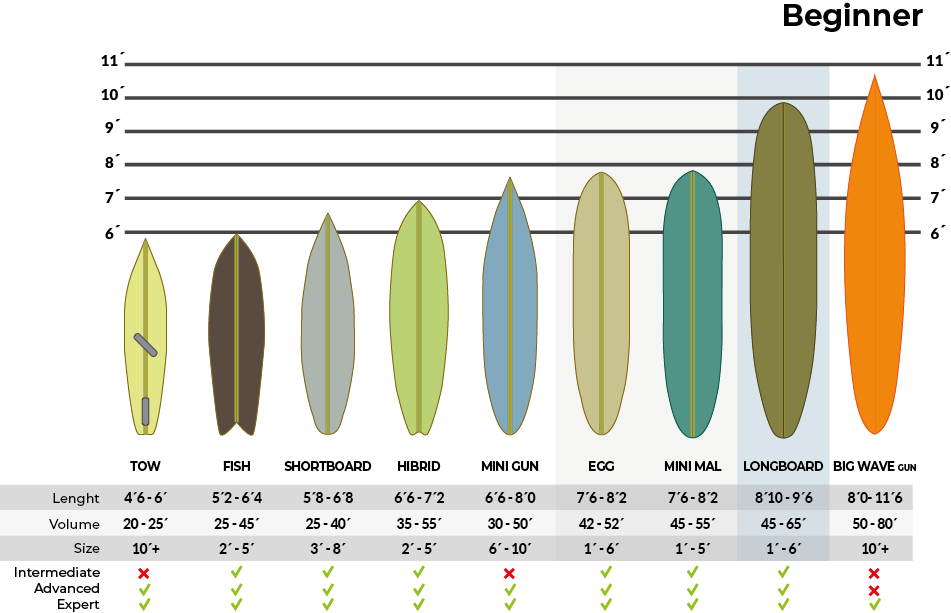
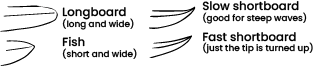
Choose the board that best suits you. Regardless of which specialized model most appeals to you, all beginners should start with a longboard and master the basics before investing in a more advanced surfboard.
The longer the surfboard, the faster you can paddle it. The faster you can paddle, the easier it is to catch a wave and get the added speed you need to start planing down the face. With a longboard, you can stand up when a wave fi rst starts to steepen and well before it breaks. With a shortboard you need to wait until the wave crest starts to break, and then you need to stay in the steeper section. The wider a board, the more fl otation and stability it provides, but the harder it becomes to change direction quickly by leaning from side to side.
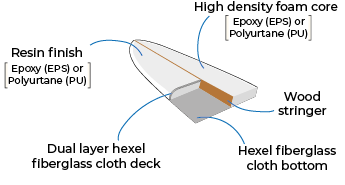
Anatomy of a surfboard
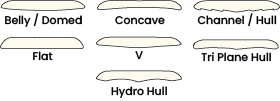
The bottom of a surfboard can be convex, concave, V-shaped, carved with channels or a mixture of these along the length of the board. Surfers select a combination depending on the size of the wave they want to ride and the types of turns they want to make.
The top of a surfboard is known as the platform and this is where your feet will go. The shape of the platform influences the overall volume of the surfboard. The more domed the platform, the more concentrated the volume will be along the stinger and provide greater flex.
The wider the nose, the larger the surface area of the board and the easier it will catch a wave. The narrower the nose, the faster the board will turn and the less wind resistance it will impose when you try to catch a wave against a strong sea breeze.
Rocket
Rocker describes the amount of camber a board’s nose, body and tail have and helps determine how maneuverable a board is, as well as how fast it is. The less rocker a board has, the faster it will be when trying to catch a wave.
Thickness
The foil helps determine the strength, flex and weight of a board. In addition to being easy to paddle, boards with a lot of float can start to plane at slow speeds when the slope of the wave is not steep. These boards can catch smaller waves, softer waves and regular waves. However, boards that are too floaty are more difficult to maneuver.
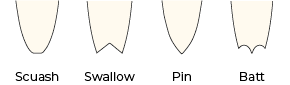
Tail
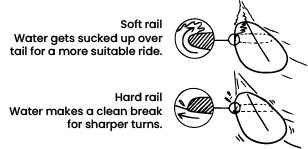
The shape of a surfboard’s tail affects how the board interacts with the wave face and the water flowing across it. Wider, thicker tail shapes have more surface area and help the board float and generate lift, which allows the surfboard to glide over the surface of the water more easily.
The wider and thicker the tail of a surfboard, the more stable and buoyant it will be.
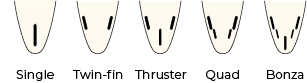
Keels should provide a balance between going straight and turning. Deeper fins with a larger surface area create more forward momentum and prevent the tail from sliding out, but also make it more difficult to execute sharp turns. Smaller fins allow for sharp turns and give the board a looser feel.
There are many designs, shapes and combinations for every condition.
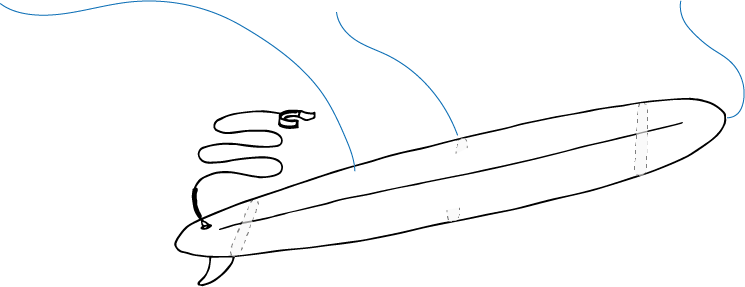
The stringer is the centerline of a surfboard, the “core”, usually a thin layer of plywood running down the centerline of a surfboard that joins both sides of the board. It provides structure, stability and ease of riding. Soul-less models are becoming increasingly popular, allowing the surfer greater flexibility of movement.
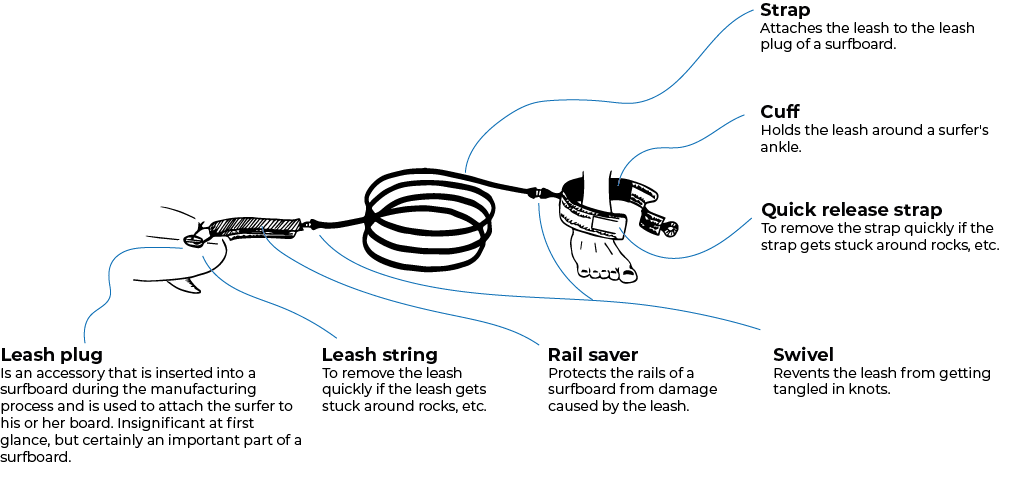
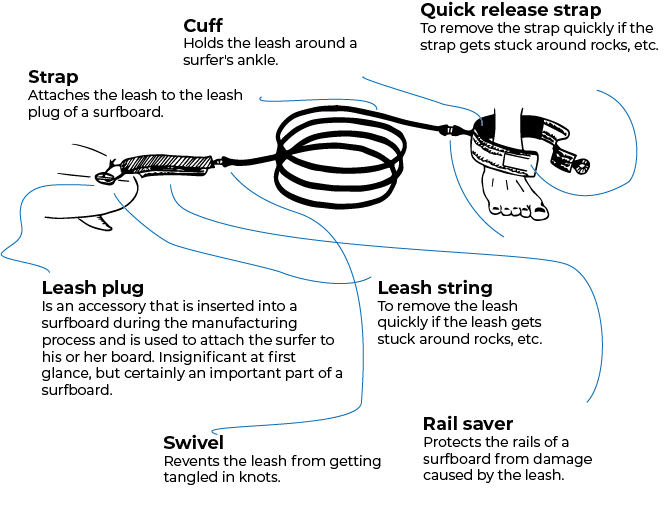
Leash
A leash is a urethane rope that surfers use to hold onto their surfboard to keep it from floating when they fall off. As a general rule, the strap length is approximately the same length as the board you are mounting.